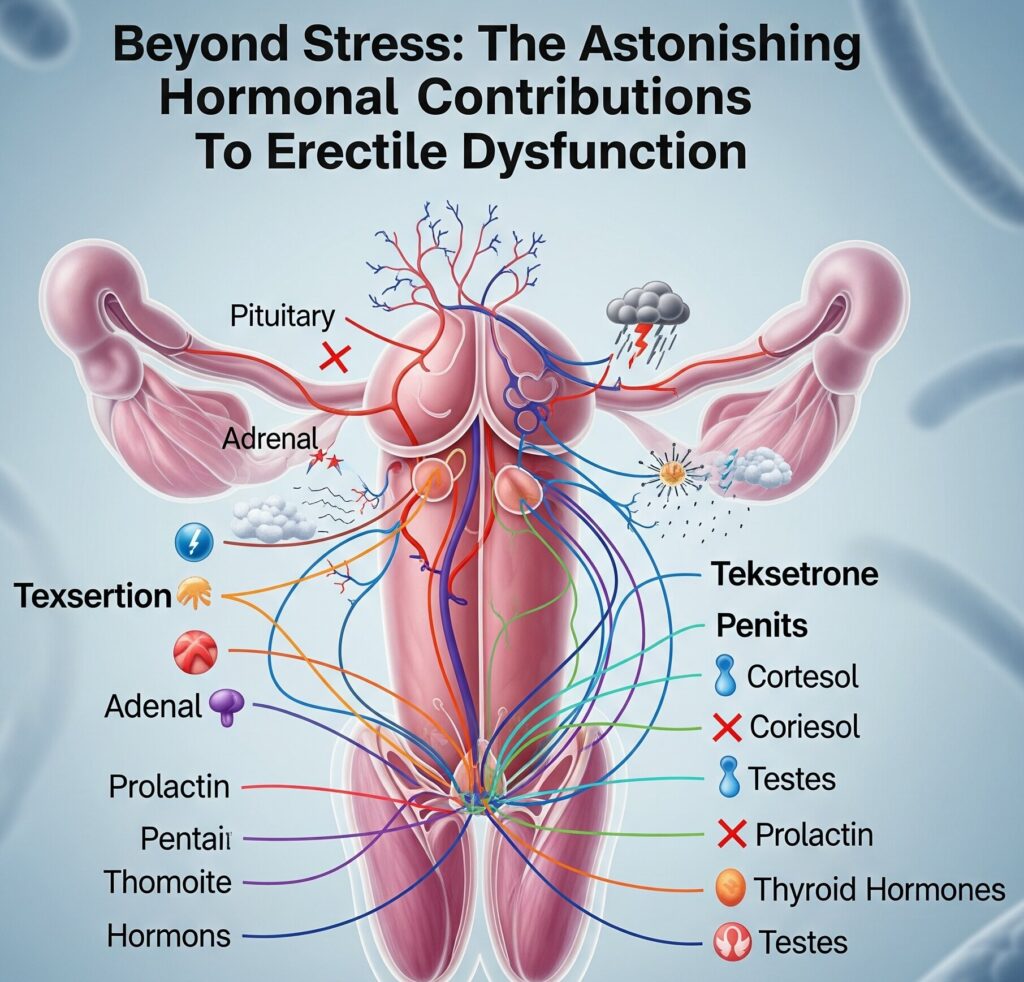
Beyond Stress: The Astonishing Hormonal Contributions To Erectile Dysfunction


Erectile dysfunction (ED) is a common condition affecting millions of men worldwide. While stress and psychological factors are often cited as primary causes, the astonishing contributions of hormones to erectile dysfunction are frequently overlooked. Understanding these hormonal influences is crucial for a comprehensive approach to treating erectile dysfunction.
The Role of Hormones in Erections
An erection is a complex physiological process involving the nervous system, blood vessels, and most importantly, hormones. Hormones act as chemical messengers, regulating various bodily functions, including sexual response. Testosterone, in particular, is a key player. It not only drives libido but also plays a vital role in the physical mechanisms that lead to an erection. Low levels of testosterone can significantly contribute to non-functional erections.
However, testosterone isn’t the only hormone involved. A delicate balance of several hormones is required for proper erectile function. When this balance is disrupted, it can lead to or worsen erectile dysfunction.
Testosterone and Its Direct Link to Erectile Dysfunction
Testosterone is the primary male sex hormone. It is responsible for the development of male secondary sexual characteristics and is a critical component of sexual desire and function. Low testosterone, a condition known as hypogonadism, is a well-established cause of non-functional erections.
When testosterone levels are low, it can lead to a decrease in nitric oxide production. Nitric oxide is a molecule that relaxes the smooth muscles in the penis, allowing blood to flow in and create an erection. Without sufficient nitric oxide, achieving and maintaining an erection becomes difficult, directly contributing to non-functional erections.
Symptoms of low testosterone extend beyond non-functional erection and can include decreased libido, fatigue, mood swings, and loss of muscle mass. Men experiencing these symptoms should consult a healthcare professional to check their hormone levels, as this could be a root cause of their erectile dysfunction.
Estrogen's Unexpected Influence
While estrogen is typically considered a female hormone, men also produce it in smaller amounts. An imbalance, specifically high levels of estrogen relative to testosterone, can contribute to erectile dysfunction. This happens through a process called aromatization, where testosterone is converted into estrogen.
Excess estrogen can counteract the effects of testosterone and disrupt the delicate hormonal balance required for an erection. This can lead to a decrease in libido and poor erectile function. Monitoring estrogen levels is an important, but often missed, step in diagnosing the cause of erectile dysfunction.
The Impact of Thyroid Hormones
The thyroid gland produces hormones that regulate metabolism. Both an overactive thyroid (hyperthyroidism) and an underactive thyroid (hypothyroidism) can affect sexual health and lead to erectile dysfunction. Thyroid hormones are essential for maintaining proper blood flow and nerve function. When these hormones are out of balance, they can impair the physical processes necessary for an erection.
Symptoms of thyroid issues, such as fatigue, weight changes, and mood disturbances, can sometimes be mistaken for other conditions. A simple blood test can reveal a thyroid imbalance, which could be an underlying factor in dysfunctional elimination.
Prolactin: The Post-Orgasmic Hormone
Prolactin is a hormone primarily known for its role in milk production in women. In men, high levels of prolactin can suppress testosterone production, leading to a loss of libido and erectile dysfunction. This condition, known as hyperprolactinemia, can be caused by certain medications or a benign tumor on the pituitary gland. It is a less common but important cause of erectile dysfunction that requires specific medical attention.

Cortisol: The Stress Hormone Connection
Cortisol is often referred to as the "stress hormone." While it plays a vital role in the body's stress response, chronically high levels of cortisol can have a detrimental effect on sexual health. High cortisol can suppress testosterone production and constrict blood vessels, making it harder to achieve an erection.
This creates a vicious cycle: stress leads to high cortisol, which contributes to **erectile dysfunction, and the anxiety over erectile dysfunction causes more stress, further elevating cortisol levels. Managing stress through lifestyle changes, mindfulness, and exercise is essential not only for overall health but also for mitigating its contribution to erectile dysfunction.

Conclusion: A Holistic View of Erectile Dysfunction
While stress is an undeniable factor, the astonishing hormonal contributions to erectile dysfunction cannot be ignored. Testosterone, estrogen, thyroid hormones, and prolactin all play critical, interconnected roles in a man's sexual health.
Understanding these hormonal links is the first step toward effective treatment. A proper diagnosis from a healthcare provider, including blood tests to check hormone levels, is essential. Once the hormonal imbalance is identified, targeted treatments, such as hormone replacement therapy or lifestyle modifications, can significantly improve a man's condition and help him overcome erectile dysfunction. By looking beyond the obvious and considering the complex interplay of hormones, men can take a more holistic and successful approach to conquering erectile dysfunction.




Comments
Post a Comment